

Seeing leadership principles on a PowerPoint isn’t the same as knowing when or how to put them into action.
Most people understand that instinctively, especially in high responsibility environments. It’s one thing to discuss communication, trust, decision making, accountability, or leadership inside a classroom. It’s another thing entirely to navigate those things in real time while pressure, uncertainty, fatigue, emotion, and responsibility are all present at once.
I think that’s part of the reason some lessons stay with us while others quietly fade away.
Over the years, I’ve watched people sit through training sessions, take notes, pass tests, and still struggle when real situations unfolded in front of them. Not because they were incapable, but because there is often a space between understanding something intellectually and understanding it operationally, emotionally, or practically in the moment.
The fire service taught me that early.
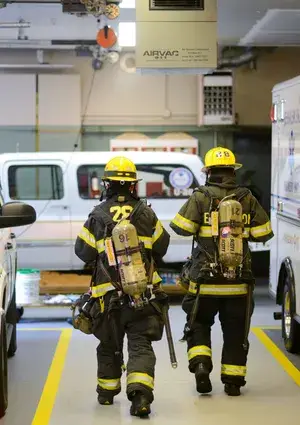
You can study fire behavior in a classroom, but standing inside a burning building with heat pushing down around you creates a completely different understanding. You can discuss communication during training, but trying to communicate clearly in smoke, noise, stress, and uncertainty changes the lesson entirely. The experience stays with you because your mind and body were both involved in the learning process.
The same thing happens in leadership.
It’s easy to talk about patience, humility, trust, or accountability when everything is calm. It becomes much harder when schedules are slipping, emotions are high, personalities clash, or people are depending on you to make the right decision under pressure.
That’s the space between classroom and experience.
And I think that space matters more than most people realize.
This doesn’t mean classrooms have no value. They absolutely do. Knowledge, principles, and training matters. But experience often deepens understanding in a way information alone cannot. Experience introduces emotion, uncertainty, consequence, reflection, and human connection into the learning process.
That’s one of the reasons Lighthouse & Campfire was intentionally designed around more than presentations and lectures.
Conversation matters. Reflection matters. Shared experience matters. Working through challenges together matters. Sometimes the most meaningful lessons happen not while someone is speaking at you, but while people are sitting together trying to understand something more deeply.
Around a campfire. On a trail. During a difficult conversation. Working through uncertainty together.
Because leadership is rarely tested in perfect classroom conditions. It’s tested in real moments involving real people, real pressure, and real consequences.
And those are often the moments people remember most.
Add comment
Comments
How can I help?
Great article . Thank you .