

Good morning Team,
Have you ever noticed that people talk differently around a campfire?
The same people tell many of the same stories. They carry the same experiences, the same responsibilities, and the same concerns. Yet somehow the conversation changes. People slow down. The phones disappear. The interruptions become fewer. People share stories they might not tell in a meeting. They ask questions they may not ask at work. They listen a little longer and speak a little more honestly.
I've seen it happen in firehouses, campsites, backyards, and after difficult calls. Something about the fire changes the conversation.
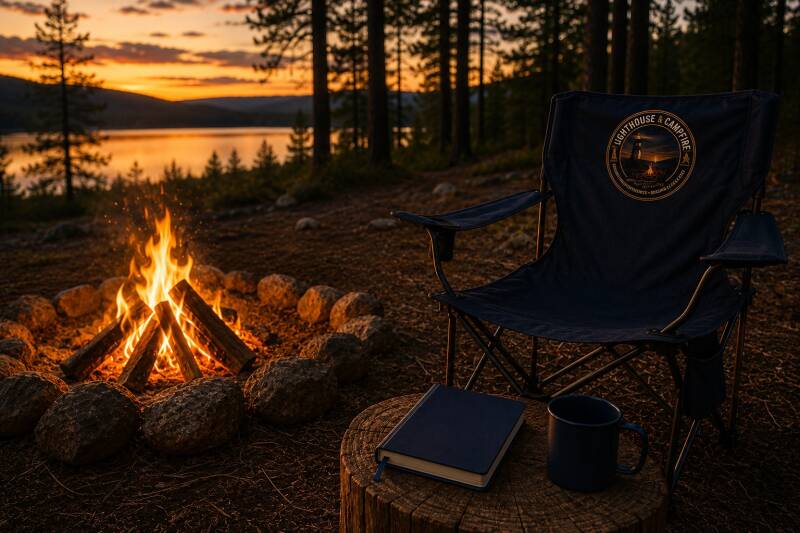
Perhaps it's because there isn't much else competing for our attention. There are no presentations, no agendas, and no notifications. There is simply the sound of wood burning, the occasional crack of a log, and the quiet understanding that there is nowhere else we need to be for the moment.
People begin sharing stories.
And stories have always been how we pass along experience.
Long before classrooms, PowerPoint presentations, and smartphones, people gathered around fires to share what they had learned. They talked about mistakes, hardships, successes, fears, and lessons that might help someone else navigate the path ahead. In many ways, very little has changed.
Some of the most meaningful conversations I've experienced happened after the meeting ended, after the drill was over, after the shift quieted down, or after the difficult call was complete. The formal part was over. The work had been done.
And then someone asked a question.
Someone shared a story.
Someone admitted they didn't have all the answers.
Those moments rarely appear on agendas, yet they are often the moments people remember.
Perhaps the campfire gives us permission to set down some of the things we carry. Titles matter a little less. Rank matters a little less. The pressure to have the right answer begins to fade. People stop trying to impress one another and begin trying to understand one another.
Maybe that's the real campfire effect.
Not the fire itself, but the space it creates.
Space to slow down.
Space to listen.
Space to reflect.
Space to ask questions that don't fit neatly into meetings, schedules, or agendas.
For thousands of years, people gathered around fires to share stories, pass along experience, offer perspective, and remind one another that they weren't carrying life alone.
Perhaps they still do.
So I'll leave you with two questions.
Who do you become when the fire is the only thing asking for your attention?
And what conversations might happen if we simply made more room for them?
Until next time,
Chuck
Add comment
Comments